

Research Digest: Understanding Cultural Vitality
Research Digest: Understanding Cultural Vitality
By
Rob Eagle, Centre for Cultural Value
This digest draws together research and practice on how to support the cultural vitality of places. Cultural vitality can be evaluated by locally specific indicators collected by local government, organisations and informal and community-led groups. These go beyond official statistics and visitor data to include qualitative and dynamic evidence of activities, including individual stories and lived experiences of organised and everyday creativity.
Understanding place from the perspective of cultural vitality helps foreground the importance of connectivity across many aspects of community life. It reinforces the importance of diversity, accessibility, infrastructure, social capital, wellbeing, cultural policies and investment, cultural engagement in its broadest sense and the presence of creative livelihoods.
This research digest provides an overview of current literature, research and practices while recognising that this is still an emerging field. Our aim is to test and develop these approaches further by working with practitioners and policymakers.
By connecting theory and practice, this digest provides a framework for better capturing, understanding and strengthening cultural vitality. This is crucial for cultural practitioners, organisations and policymakers who are seeking to support stronger, more connected and vibrant communities.
What do we mean by cultural vitality?
While the term ‘cultural vitality’ is not widely used in the UK, the concept has shaped international policy and research contexts for over 20 years. In this digest, we use the term to explore the many interconnected factors that foster vibrant cultural activities in communities.
The cultural vitality of a place is demonstrated by the depth, relevance and connectivity of its cultural life, from highly visible activities such as festivals and performances to informal, everyday creativity in green spaces and the home. When the cultural vitality of a community is thriving, it fosters a sense of belonging, strengthening the social fabric by bringing people together in shared spaces and through collective cultural experiences. Cultural vitality looks different in every place as it responds directly to local needs, strengths and structures.
To discover what we can learn from the current evidence base, read the research digest below, or download (PDF document) by clicking the button at the top of the page.
Contents
Method
- What questions did we ask?
- What is included in this research digest?
- Literature review
- Policymaker and evaluator interviews
Findings
- Ecosystem view of cultural vitality
- Multiple frameworks in use
- Cultural vitality indicators in practice
- UK policymaker perspectives
- The national picture of indicator suites in the UK
- Cultural vitality beyond cities
Implications for practitioners, policymakers and researchers
- Practitioners
- Policymakers
- Researchers
References included in this research digest
Highlights
There is no single model of cultural vitality. Each place is uniquely shaped by its own assets, histories and needs. Therefore, assessing cultural vitality requires a place-based approach which draws on locally specific practices and evidence, rather than assuming one-size-fits-all measures.
Cultural vitality is best understood as an ecosystem where institutions, grassroots groups, everyday creativity, infrastructure and policy are seen as interconnected. Siloed approaches that separate professional artforms from community culture fail to capture this complexity. Frameworks for measuring cultural vitality that use this ecosystemic approach can support cultural practitioners and organisations to demonstrate how their work connects with wider community outcomes.
Existing international frameworks provide useful reference points but also have their limitations. The Urban Institute emphasises cultural presence and participation; UNESCO links culture to economic growth, innovation and wellbeing; and Australia’s Cultural Development Network positions cultural vitality as a fourth pillar of sustainability. These frameworks present a key foundation for understanding cultural vitality, but risk being either too urban-focused or overly instrumental if directly applied. They also require adaptation to reflect local UK contexts, voices and lived experiences.
Measures of cultural vitality must become more inclusive of qualitative data and informal cultural activity. Cultural data collection across the UK is fragmented and often shaped by funder requirements rather than local need. National surveys, such as Sport England’s Active Lives and the DCMS Participation Survey, capture participation and economic value but often miss informal, rural and community-led activity. Methods to uncover the scale of community-based activity, as well as collecting and sharing qualitative evidence stories, testimonies and lived experience, will fill the gaps left by large-scale datasets and reflect what matters locally.
Cultural vitality outside of large urban centres, such as in rural areas and market towns, is particularly fragile. Challenges include geographic isolation, weak transport links, reliance on volunteers and uneven funding. Initiatives like Creative People and Places show positive impact, but without sustained investment in infrastructure and addressing wider inequalities, provision risks remaining piecemeal and unsustainable.
Introduction
Cultural activity plays a key role in shaping local identity, fostering social cohesion and supporting both individual and community wellbeing. However, in the UK, approaches to understanding the social role and impact of arts and culture have often been framed as a ‘false dichotomy’ of everyday culture versus more institution-led, professionalised or elite artforms (Hadley et al., 2025). This divide is mirrored in the priorities of local government bodies and arts funders, who frequently split priorities between cornerstone institutions such as museums and performing arts centres on the one hand, and grassroots, participatory forms of culture on the other. Evaluation practices also reflect this divide: formal, ticketed forms of culture lend themselves more readily to quantitative measurement and economic valuation, while the contributions of informal, community-led and participatory culture are often overlooked.
As a result, the more often adopted ‘return on investment’ approaches to measuring cultural value and vitality tend to privilege the most visibly monetised aspects of cultural and creative life. Yet to build strong, resilient and culturally rich places, it is crucial to recognise the broader picture of vibrancy and vitality that underpins a thriving cultural economy.
The Centre for Cultural Value has been working with cultural practitioners and policymakers to develop a Cultural Indicator Suite that recognises all forms of culture as part of the same ecosystem (Centre for Cultural Value, 2025a). This framework for cultural vitality positions the broad range of arts and cultural activities not as separate priorities but as integral to everyday community life. Time and again, we find that when cultural services are siloed and treated as separate from other functions of local government, arts and culture become more vulnerable to funding cuts (Rex and Gray, 2024).
Understanding the cultural vitality of a place is therefore crucial for cultural producers, organisations, funders and policymakers. Taking a broad view of the interconnected factors that both contribute to and benefit from cultural activity helps demonstrate how culture is vital to sustaining social cohesion and individual and community wellbeing. This is particularly important at a time when many communities face growing division and polarisation. Artists and cultural organisations can play a central role in responding to these tensions by creating spaces for dialogue and imagining alternative futures, as seen in the cultural sector’s responses to the 2024 far-right riots in the UK (Lawson Tancred, 2024).
The Centre for Cultural Value’s definition of cultural vitality draws on the Urban Institute’s Arts and Culture Indicator Project (Jackson and Herranz, 2002), which views cultural life as an ecosystem of interconnected activities, participants and organisations at all scales. Their later work expanded this concept to include the ‘presence, participation in, and support for arts and culture in everyday life’ (Jackson et al., 2006). This holistic perspective is central to understanding how culture underpins resilient, inclusive and thriving communities.
Building on this foundation, the Centre’s Cultural Indicator Framework demonstrates how cultural vitality can be measured and strengthened in ways that respond to the needs of both cultural practitioners and policymakers today.

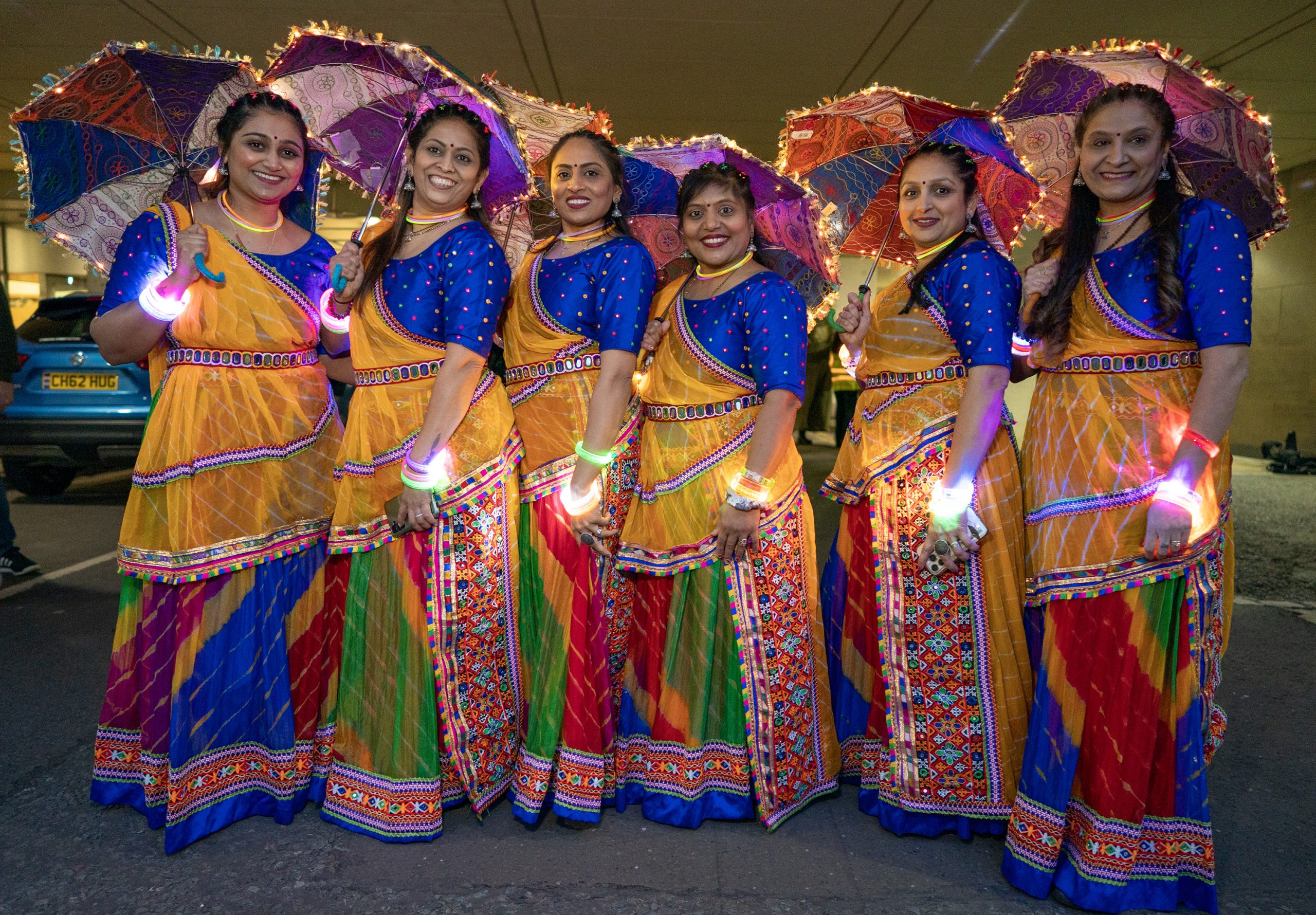
Derby Feste. Photo by Tom Platinum Morley.
Method
This digest builds on scoping research underpinning the Centre for Cultural Value’s Cultural Indicator Suite project. The project aims to develop a framework for capturing and communicating the holistic everyday cultural vitality of places.
We began with a review of the existing literature on cultural vitality and cultural indicators. This informed interviews with 14 local government cultural policymakers and evaluators across the UK. They shared how they currently measure cultural vitality using a range of indicators and existing data that links to sense of place, wellbeing and quality of life within their communities.
An interim report published in July 2025 (Centre for Cultural Value, 2025a) sets out the project’s initial findings. This digest complements the report by providing a broader context, references and further critical reflections that emerged from group discussions at the report’s launch event (Centre for Cultural Value, 2025b).
What questions did we ask?
- How have policymakers and cultural practitioners understood cultural vitality over the past two decades?
- What cultural indicators have policymakers and practitioners commonly used in the past, and which areas of cultural practice have they overlooked?
- What cultural indicators are UK policymakers and cultural producers using today, and what aspects of cultural activity are they aiming to capture?
- How could a more inclusive framework for cultural vitality support better decision-making by policymakers and cultural producers in the UK and beyond?
What is included in this research digest?
The rapid evidence review for this digest, conducted March - July 2025, consisted of:
- a research literature review of over 75 peer-reviewed publications related to keywords ‘cultural vitality’, ‘cultural indicators’ and ‘rural cultural and creative industries/economy’;
- a review of cultural policy and strategy documents from UK and international bodies;
- a review of ‘grey’ (non-peer-reviewed) or unpublished literature related to cultural vitality;
- insights from interviews with cultural policymakers and evaluators;
- and feedback from practitioners on the Centre’s Developing a Cultural Indicator Suite interim report since its publication in July 2025.
Literature review
The literature review for this research digest prioritised publications that directly address cultural vitality. Adjacent work on creative placemaking, everyday creativity and grassroots culture fell beyond the practical scope. From over 500 papers published since 2001, 40 were selected that directly address the concept of cultural vitality, with many more addressing the subject without using the term explicitly.
Similarly, ‘cultural indicators’ was prioritised as a term over related literature on national cultural data (the focus of our parallel work on the National Cultural Data Observatory) and on general evaluation methods. Priority was given to publications from the past two decades, following the Urban Institute’s foundational work on cultural vitality (Jackson et al., 2006). The review was also limited to works published in the English language.
Policymaker and evaluator interviews
In partnership with The Audience Agency, the Centre for Cultural Value conducted interviews with UK cultural policymakers and evaluators. It is important to note that the policymaker and evaluator interviews were carried out as scoping research. These discussions provided an opportunity to explore the terminology practitioners use in relation to our framework for cultural vitality, as well as the methods they currently employ to capture cultural activity.
The findings from these interviews should not be read as conclusions but as prompts to refine and adapt our Cultural Indicator Suite so that it can be tested and implemented in future collaboration with practitioners. This digest summarises the first scoping phase of the research.

Junction Arts. Bolsover Children's Festival.
Findings
Ecosystem view of cultural vitality
According to the Urban Institute’s framework (Jackson et al., 2006), cultural vitality cannot be understood by only looking at formal institutions or individual artforms. It requires an ecosystemic perspective that captures:
- opportunities and frequency of cultural activity;
- levels of engagement - how much the community engages and in what capacity;
- diversity of offer and of those who are participating;
- accessibility and barriers to engagement for different individuals and communities;
- supporting infrastructure, including funding, venues and wider community and local government support.
This ecological approach encompasses not just the creative ecosystem, but all the elements that shape and support the cultural life of a place. It includes a variety of non-profit, commercial and public organisations as well as informal groups and seeks to capture the tangible and intangible resources, infrastructure and networks that make a cultural ecosystem sustainable.
This view is echoed in further studies, which argue that culture should be approached ecologically in order to capture interactions between formal institutions, community spaces, policy contexts, infrastructure and everyday creativity (Holden, 2015). This perspective recognises culture as embedded in everyday life and shows how it interacts with policy, health, education and community wellbeing.
Consequently, there is no universal template for cultural vitality. Each community and local authority area will have different assets, priorities and needs. A city that might host large events and is home to a range of cultural institutions may look very different from a town that values community venues, informal dance lessons and grassroots gigs. But both can be culturally thriving. For cultural vitality to flourish, all forms of culture, formal and informal, must be recognised and valued.
The ecosystem approach presents a challenge to traditional cultural policy approaches, which often treat publicly subsidised institutions, private spaces and community-led activities as separate. However, more recent cross-sectoral approaches, such as social prescribing and creative health, can be seen as steps towards a changing policymaking approach, recognising the role that arts and culture can play in wellbeing and in delivering outcomes in areas including statutory services (Dowlen, 2023).
Multiple frameworks in use
Beyond the Urban Institute’s framework, two other significant approaches shape current understanding of cultural vitality: one from UNESCO and the other from the Cultural Development Network (CDN) in Australia. These models are complementary but differ from the Urban Institute’s work.
UNESCO
UNESCO links cultural vitality to innovation, job creation, inclusion and wellbeing (UNESCO, 2014a). Its measurement frameworks aim to capture culture’s role across both informal participation (e.g. at-home, grassroots and non-ticketed activities) and formal cultural events that generate employment and economic impacts (UNESCO, 2009).
Former Director-General Irina Bokova described cultural vitality as ‘synonymous with innovation and diversity. Culture creates jobs, generates revenues and stimulates creativity... culture is a lever that promotes social inclusion and dialogue’ (UNESCO, 2014b). While this highlights culture’s broad social role, it risks becoming what Hadley and Gray (2017) term ‘hyperinstrumentalisation’, where culture is valued mainly for its utility for achieving larger societal and economic objectives, rather than for its intrinsic worth. Such expectations place enormous pressure on artists and cultural producers and risk discrediting them if ambitious outcomes are not achieved.
Cultural Development Network
In Australia, the Cultural Development Network (CDN) has been advocating for the inclusion of cultural vitality as the ‘fourth pillar’ of sustainability, alongside social, economic and environmental dimensions. Building on the work of Jon Hawkes (2001), their framework positions culture as central to public planning, community identity and wellbeing, not as a secondary concern. Hawkes stresses that cultural vitality is about more than supporting the arts; it involves inclusive participation, democratic dialogue and diverse forms of cultural expression. He calls for cultural development to be embedded in governance structures, with cultural indicators employed to evaluate progress and reflect the lived experiences, creativity and aspirations of communities.
Over the past two decades, CDN has applied its cultural vitality framework when commissioning community arts projects. The three-year Generations Project (2006-9), for example, examined how local government areas could integrate arts and culture to foster community cohesion in an era of significant global change (Mulligan and Smith, 2010).
In a forthcoming monograph on CDN’s approach (due to be published in 2026), Kerrie Schaefer argues that cultural vitality cannot be understood only through top-down arts projects. Instead, it also depends on grassroots and community practice, particularly in non-urban areas where local organisations use place-based methods to strengthen cultural life. By applying the four pillars of sustainability, Schaefer shows how these often overlooked practices highlight the vital role of community and local context in cultural planning.
Cultural vitality indicators in practice
Cultural vitality can be assessed through cultural indicators: observable metrics that demonstrate how cultural life is experienced in a place. Historically, local governments have approached the evaluation of cultural life through quantitative measures, often privileging formal institutions and ‘high art’ while overlooking grassroots and informal practices (Badham, 2009). In the 1970s and 1980s, initial attempts at constructing cultural indicators largely revolved around counting cultural assets and audience numbers (DiMaggio, 1987).
More recent large-scale surveys, such as those from the World Cities Culture Forum (2022), still rely heavily on quantitative data. While useful, these surveys offer only a partial view and do not include everyday cultural activities. This overlooks the significance of informal cultural participation in animating lives and building social connection and community resilience (Miles and Gibson, 2016). As Colin Mercer (2003) argues, indicators should not be limited to statistics; we also need stories, local context and insight into what culture means in everyday life, so that policy reflects what culture really means to communities. In the 21st century, measurement has started to move away from ‘supply-side’ metrics towards capturing broader measures of participation (Bennett, 2001) and linking culture to community wellbeing outcomes (Wali et al., 2002; Duxbury, 2005). The Warwick Commission (2015) has also called for a more holistic assessment of cultural impact and an ecosystem approach, recognising both the intrinsic and tangible benefits of cultural life.
The Cultural Indicator Suite framework developed by the Centre for Cultural Value emphasises how factors contributing to the cultural vitality of a place are interconnected and interdependent. The interim report sets out seven proposed indicators or ‘dimensions’ of cultural vitality (Centre for Cultural Value, 2025a):
- Cultural participation and engagement
- Cultural infrastructure and accessibility
- Cultural diversity and inclusivity
- Creative economy and employment
- Social and civic engagement
- Cultural policy and investment
- Wellbeing and quality of life
UK policymaker perspectives
Our interviews with policymakers, along with feedback following the interim report launch, reflected how local authorities value different cultural indicators, depending on their context and priorities (Centre for Cultural Value, 2025a).
In places such as Kent and Leeds, support for culture is often linked to economic growth in various sectors, including tourism and the creative industries. Here, cultural initiatives are justified as part of economic strategy, especially in the face of increasingly squeezed budgets.
In contrast, places such as Swansea and Rochdale prioritise cultural activities that drive inclusion, health and social connection outcomes.
Across the board, however, data collection remains fragmented and siloed. Too often, it is also shaped by funding requirements rather than evidence of lived experiences. Quantitative data from formal ticketed and institutional forms of culture remains a dominant measure of participation, and many local authorities lack the qualitative methods and tools to capture community, rural and informal cultural activity.
The national picture of indicator suites in the UK
Several national cultural data surveys and studies exist to track aspects of cultural life across the UK. These provide a useful overview of cultural engagement trends and the wider economic and social benefits of culture. However, as they rely primarily on large sets of quantitative data, they miss important nuances such as why the picture of cultural vitality looks different from one place to another.
Two key examples are Sport England’s Active Lives Survey and the DCMS-commissioned Participation Survey. Both offer valuable insights into cultural participation on a national scale. In addition, recent studies by Arts Council England (Cebr, 2025), McKinsey (2023) and the British Academy (2025) provide evidence of the economic and social impact of culture at a national level.
While these surveys collect useful data and provide valuable context for measuring cultural vitality, they show only part of the picture. They cannot give a comprehensive view of cultural vitality nationally nor provide the specific detail needed to understand cultural vitality at a local level.
Cultural vitality beyond cities
Local governments in rural areas and market towns across the UK often face persistent barriers to sustaining arts and cultural activities. Geographic isolation, patchy transport links and dispersed populations can limit both the accessibility of cultural provision and the potential for consistent audience engagement (Bell and Jayne, 2010). These challenges are exacerbated by rural poverty, which restricts residents’ ability to financially afford participation in cultural activities and simultaneously reduces local authorities’ ability to generate revenue or attract private investment (Shucksmith, 2011). As a result, cultural provision in many contexts outside of large urban areas becomes fragile, highly dependent on voluntary labour and vulnerable to the uneven distribution of funding and resources (Balfour et al., 2018).
Regional and national bodies, such as Arts Council England, have acknowledged the need for tailored strategies to sustain cultural activity outside of cities. Initiatives, such as Creative People and Places, fund projects designed with local communities to reflect community needs and aspirations. Local governments, often working with voluntary organisations and social enterprises, have also experimented with models of community-led cultural development, tapping into established networks to sustain provision despite structural barriers (Munro, 2016). We also see examples like Fun Palaces in which communities across the UK have organised creative and cultural experiences for themselves as a way to have their needs heard (Centre for Cultural Value, 2024).
Without addressing broader structural issues, such as underfunded transport infrastructure and entrenched socio economic deprivation, these initiatives risk being piecemeal and unsustainable (Chapain and Comunian, 2009). For cultural vitality to flourish in rural communities and market towns, policy frameworks must position culture as a vital component of community resilience, identity and social wellbeing.

Bradford 2025. Photo by Karol Wyszynski.
Implications for practitioners, policymakers and researchers
Our review of current research and consultation with cultural policymakers and practitioners highlights several important implications. These relate to how practitioners, policymakers and researchers can each contribute to building and sustaining cultural vitality.
Practitioners
Cultural organisations and grassroots groups can use cultural vitality frameworks to better articulate the value of their work, identify gaps in participation and build stronger evidence to support their case for funding and recognition. This does not necessarily require new data collection but rather a broader, ecosystemic view of existing activities and an exploration of how current data connects with locally specific indicators.
Policymakers
Research on cultural vitality underscores the need for integrated cultural policy, where culture is embedded within broader agendas such as health, education, wellbeing and community resilience. Supporting cultural vitality requires recognising all forms of culture, both grassroots and institutional, and ensuring they receive investment. Local government can play a central role as anchor data organisations, supporting more joined-up, place-based data collection to inform equitable and sustainable cultural provision.
Researchers
There is a pressing need to expand cultural measurement frameworks beyond economic impact and attendance figures. Researchers should incorporate qualitative evidence, lived experiences and indicators relevant to local contexts. This requires the development of more participatory research methodologies and robust qualitative data collection methods that are capable of providing comparative insights across diverse communities and international settings.
Summary
Cultural vitality can be understood as an ecosystem, encompassing both formal institutions and everyday creativity that strengthens social cohesion, wellbeing and community identity. And yet current approaches to capturing both the benefits and supporting infrastructure of culture remain fragmented and often overlook grassroots activity. National surveys and statistics provide useful context, particularly on economic value, but they cannot replace the nuanced, place-based indicators needed to understand cultural vitality in practice.
Reviewing international frameworks and conducting scoping research with UK policymakers has highlighted the need to better capture and understand the full breadth of cultural life. Developing a holistic, ecosystemic, place-based approach to assessing cultural vitality, one that values diversity, accessibility and local context, is an important step towards making the contributions of cultural activity visible to policymakers, practitioners and communities alike. This research digest makes clear that sustaining cultural vitality requires valuing diverse forms of participation, addressing structural inequalities, particularly outside of cities and embedding culture within wider policy agendas. By connecting theory with practice and working collaboratively with practitioners, policymakers and international partners, the Centre for Cultural Value aims to develop a practical framework that not only measures but also strengthens the role of culture as a vital component of resilient, connected and thriving communities.
References included in this research digest
Badham, M. 2009. Cultural indicators: Tools for community engagement? The International Journal of Arts Management, 11(2), pp. 51-62. https://www.researchgate.net/publication/307767957_Cultural_Indicators_Tools_for_Community_Engagement
Balfour, B., Fortunato, M. and W-P, Alter, T. 2018. The creative fire: An interactional framework for rural arts based development. Journal of Rural Studies, 63, pp. 229-239. Available from: https://tinyurl.com/yp7awn6n
Bell, D., and Jayne, M. 2010. The creative countryside: Policy and practice in the UK rural cultural economy. Journal of Rural Studies, 26(3), 209–218. Available from: https://doi.org/10.1016/j.jrurstud.2010.01.001
Bennett, T. 2001. Differing diversities: transversal study on the theme of cultural policy and cultural diversity. Council of Europe Publishing. https://www.culturenet.cz/coKmv4d994Swax/uploads/2014/11/Differing-Diversities.pdf
British Academy. 2025. Measuring Social and Cultural Infrastructure. Available from: https://www.thebritishacademy.ac.uk/publications/measuring-social-and-cultural-infrastructure
Cebr. 2025. Spillover impacts in the publicly funded arts and culture sector. Available from: https://www.artscouncil.org.uk/spillover-impacts
Centre for Cultural Value. 2024. Creative Voices, Activist Voices: exploring the radical potential of cultural participation. Leeds: Centre for Cultural Value. Available from: https://www.culturalvalue.org.uk/creative-voices-activist-voices-fun-palaces
Centre for Cultural Value. 2025a. Developing a Cultural Indicator Suite: Understanding and measuring cultural vitality in the UK. Leeds: Centre for Cultural Value. Available from: https://www.culturalvalue.org.uk/understanding-and-measuring-cultural-vitality-in-the-uk
Centre for Cultural Value. 2025b. Cultural Vitality: A discussion of national cultural indicators. [Online].[Accessed 11 July 2025]. Available from: https://youtu.be/STjbaiYhw30
Chapain, C. and Comunian, R. 2009. Enabling and Inhibiting the Creative Economy: The Role of the Local and Regional Dimensions in England, Regional Studies, 44(6), pp. 717–734. Available from: https://www.researchgate.net/publication/227625495_Enabling_and_Inhibiting_the_Creative_Economy_The_Role_of_the_Local_and_Regional_Dimensions_in_England
Crossick, G. and Kaszynska, P. 2016. Understanding the Value of Arts and Culture. Swindon: Arts and Humanities Research Council. https://www.ukri.org/wp-content/uploads/2021/11/AHRC-291121-UnderstandingTheValueOfArts-CulturalValueProjectReport.pdf
DiMaggio, P. 1987. Classification in art. American Sociological Review, 52(4), pp. 440455. https://www.jstor.org/stable/2095290
Dowlen, R. 2023. Vision paper: culture, health and wellbeing. January 2023. Leeds: Centre for Cultural Value. Available from: https://www.culturehive.co.uk/CVIresources/culture-health-and-wellbeing
Duxbury, N. 2005. Cultural Indicators and Benchmarks in Community Indicator Projects. Accounting for Culture: Thinking Through Cultural Citizenship, eds Andrew, C., Gattinger, M., Jeannotte, M. and Straw, W., University of Ottawa Press, pp. 257-273. https://books.openedition.org/uop/2428
Hadley, S. and Gray, C. 2017. Hyperinstrumentalism and cultural policy: Means to an end or an end to meaning? Cultural Trends, 26(2), pp. 95–106. Available from: https://doi.org/10.1080/09548963.2017.1323836
Hadley, S., McDowell, E. and Walmsley, B. 2025. The mutability of cultural value: a critical analysis. Cultural Trends, pp. 1–17. https://doi.org/10.1080/09548963.2025.2527181
Hawkes, J. 2001. The Fourth Pillar of Sustainability: culture’s essential role in public planning. Melbourne: Common Ground. Available from: https://www.culturaldevelopment.net.au/downloads/FourthPillarSummary.pdf
Holden, J. 2015. The Ecology of Culture: A Report Commissioned by the Arts and Humanities Research Council’s Cultural Value Project. Swindon: Arts and Humanities Research Council.
Jackson, M. R., and Herranz, J. 2002. Culture counts in communities: A framework for measurement. Urban Institute. https://www.issuelab.org/resources/7086/7086.pdf
Jackson, M.R., Kabwasa-Green, F. and Herranz, J. 2006. Cultural Vitality in Communities: Interpretation and Indicators. Washington, DC: The Urban Institute. https://www.urban.org/sites/default/files/publication/50676/311392-Cultural-Vitality-in-Communities-Interpretation-and-Indicators.PDF
Lawson-Tancred, J. 2024. A Suite of Exhibitions Respond to the U.K.’s Anti-Immigration Riots. Artnet.
https://news.artnet.com/art-world/migration-museums-2542346
McKinsey. 2023. Assessing the direct impact of the UK arts sector. Available from: https://www.mckinsey.com/uk/our-insights/assessing-the-direct-impact-of-the-uk-arts-sector
Mercer, C. 2003. From data to wisdom: Building the knowledge base for cultural policy. https://papers.ssrn.com/sol3/papers.cfm?abstract_id=2153369
Miles, A., and Gibson, L. 2016. Everyday participation and cultural value. Cultural Trends, 25(3), pp. 151–157. https://doi.org/10.1080/09548963.2016.1204043
Mulligan, M. and Smith, P. 2010. Art, Governance and the Turn to Community: Putting Art at the Heart of Local Government. Melbourne: RMIT University. Available from: https://culturaldevelopment.net.au/wp-content/uploads/Generations_report_AusCo-Copy.pdf
Munro, E. 2016. Developing the Rural Creative Economy ‘from Below’: Exploring Practices of Market-Building amongst Creative Entrepreneurs in Rural and Remote Scotland. M/C Journal, 19(3). Available from: https://doi.org/10.5204/mcj.1071
NHS England, 2025. Social prescribing. https://www.england.nhs.uk/personalisedcare/social-prescribing/
Rex, B. and Gray, C. 2024. Change? Decay? Promise? Fifty years of local government cultural services in the UK. Local Government Studies, 50(6), pp. 1118–1128. https://doi.org/10.1080/03003930.2024.2419869
Shaefer, K. Forthcoming. Cultural Vitality, Community Performance and Non-Urban Places: Rural Local Acts. Cham, Switzerland: Palgrave Macmillan. Available from: https://link.springer.com/series/16293
Shucksmith, M. 2011. Inequality, power and injustice in rural areas: beyond social exclusion? XXIV Congress of the European Society for Rural Sociology, Chania, Crete. August 2011. Keynote paper. Available from: https://www.researchgate.net/publication/266907978_Inequality_power_and_injustice_in_rural_areas_beyond_social_exclusion
UNESCO. 2009. The 2009 UNESCO Framework for Cultural Statistics (FCS). UNESCO Institute for Statistics. Available from: https://unstats.un.org/unsd/statcom/doc10/Bg-FCS-e.pdf
UNESCO. 2014a. UNESCO Culture for Development Indicators: Methodology Manual. UNESCO. Available from: https://unesdoc.unesco.org/ark:/48223/pf0000229608
UNESCO. 2014b. Culture is vital in the global development agenda, emphasizes Florence Declaration. UNESCO. Available from: https://www.unesco.org/en/articles/culture-vital-global-development-agenda-emphasizes-florence-declaration
Wali, A., Severson, R., and Longoni, M. 2002. Informal arts: Finding cohesion, capacity and other cultural benefits in unexpected places. Chicago: Chicago Center for Arts Policy. https://www.americansforthearts.org/node/101040
Warwick Commission. 2015. Enriching Britain: culture, creativity and growth. Coventry: University of Warwick. Available from: https://warwick.ac.uk/fac/cross_fac/warwickcreativeexchange/locateculture/warwick_commission_final_report.pdf
World Cities Culture Forum. 2022. World Cities Culture Report. https://worldcitiescultureforum.com/publication/world-cities-culture-forum-report-2022/
Glossary
Cultural indicators
Observable metrics used to capture how cultural life is experienced in a place. They may include quantitative data (attendance, participation rates, infrastructure) and qualitative insights (stories, wellbeing, inclusion).
Cultural vitality
The presence, participation in and support for arts and culture in everyday life. It encompasses both formal institutions and informal, community-led creativity and is central to resilient, inclusive and thriving communities.
Everyday creativity
The informal and often non-institutional ways people engage in creative practice in their everyday lives, from cooking, gardening and craft to storytelling and music-making, which contribute to cultural vitality.
Formal culture
Professionalised, often subsidised or ticketed cultural activity, such as museums, galleries and performing arts institutions.
Hyperinstrumentalisation
The tendency to value culture only for its economic or social outcomes (e.g., job creation, health impact), rather than recognising its intrinsic worth (see Hadley and Gray, 2017).
Informal culture
Everyday and community-led cultural practices, such as village festivals, amateur performance, crafting, music-making and creativity in homes and public spaces.
Social prescribing
An approach used by health and social services that connects people to community-based activities and groups, such as arts, culture and volunteering, in order to improve health and wellbeing (see NHS England, 2025).


